https://youtu.be/Qg3T51JQrJ8
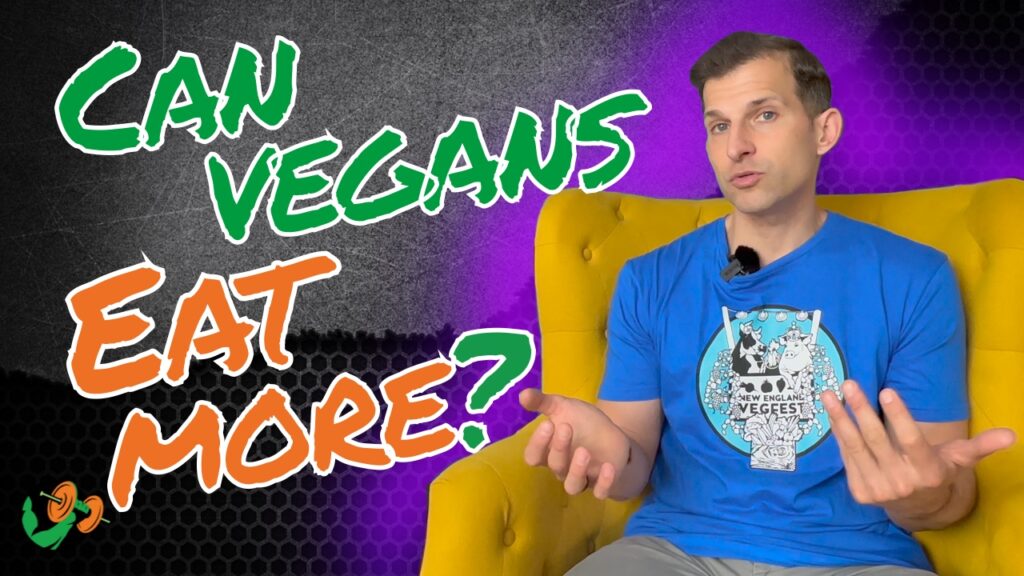
Video content summary: Can Vegans Eat More? What the Science Says
Your body does not need more calories just because you eat vegan. If you switched from vegan to omnivore tomorrow, your basic calorie needs would stay the same.
What can change is how much food fits into those calories, how full you feel, and how active you are during the day. That is why some vegans feel like they can eat more.
Calorie math stays the same, but fiber changes the picture
The baseline is simple: calorie needs are calorie needs. You cannot outsmart that with a label like “vegan” or “omnivore.”
Still, plant-based diets often include more fiber because they rely more on beans, grains, fruits, vegetables, and other whole plant foods. That matters because fiber does not break down the same way other carbohydrates do.
This quick comparison shows the difference:
| Type of carbohydrate | Approximate energy per gram |
|---|---|
| Non-fiber carbohydrate | 4 calories |
| Dietary fiber | About 1.5 calories |
Because fiber gives your body less usable energy than regular carbs, a higher-fiber diet may let you eat a bit more food while taking in slightly fewer effective calories. You can go too high with fiber, of course, but many people adapt over time and handle a healthy, fiber-rich diet well.
More food on your plate does not always mean more calories in your body.
Why vegan meals often feel bigger
Another reason vegans may feel like they eat more is simple food volume. Many plant foods take up more space on the plate without packing in as many calories.
A meal built around potatoes, rice, beans, vegetables, and fruit often looks larger than a calorie-matched meal built around more energy-dense foods. So even when total calories are similar, the vegan meal can feel more satisfying and filling.
That does not mean every vegan meal is low-calorie. Peanut butter, nuts, oils, and processed vegan foods can add up fast. But a mostly whole-food plant-based pattern usually gives you more volume for the same calorie budget.
Better energy and more movement can raise needs a little
The most interesting argument is not about calorie absorption. It is about what happens after you eat.
When your diet leaves you feeling better, you often move more. That can mean harder training, better recovery, or simply more day-to-day movement. Over time, that extra activity can raise calorie needs a bit.
Muscle also matters. Muscle is metabolically demanding, so maintaining more of it requires more energy. If a well-planned vegan diet helps you train consistently and recover well, you may end up needing slightly more food.
The difference is not thousands of calories. It is usually modest.
Extra support from VeganProteins
If you want help dialing in fat loss while keeping muscle, VeganProteins offers a one-on-one coaching application. They also share updates through the Muscles By Brussels waitlist.
The team also mentioned an August 8 webinar called “Five Keys to Vegan Fat Loss,” plus a vegan pre-workout guide for attendees.
Final thoughts
A vegan diet does not rewrite calorie science. What it can do is change the kind of food you eat, how full you feel, and how much energy you have to move.
For most people, the biggest win is not a huge calorie bonus. It is a more nourishing, satisfying way to eat that can make smart nutrition easier to stick with.
